Skip to content
Short Answer: Flour silos are large steel storage structures designed to safely store and protect bulk flour in industrial facilities and flour mills.
Managing bulk flour storage presents significant challenges for mills, bakeries, and food industry operations. Modern production facilities must protect thousands of pounds of flour from moisture, pests, and contamination while maintaining efficient access for production needs. Without proper storage solutions, facilities risk product loss, quality inconsistencies, and hygiene standards issues.
This is where flour silos prove invaluable. These industrial storage systems offer a controlled environment that keeps the flour fresh and ready for use. Beyond basic storage, well-designed silos provide automated material handling, level measurement, and dust proof controls – all while meeting strict food safety regulations.
This guide walks through everything you need to know about flour silos:
- How flour silos work and what they do
- Main features that help them work better
- What to think about when setting up a silo
- Basic care and cleaning tasks needed regularly
Whether you’re planning a new facility or upgrading existing storage, you’ll find practical information to make informed decisions about your flour storage needs.
Flour Silo Design and Construction Basics
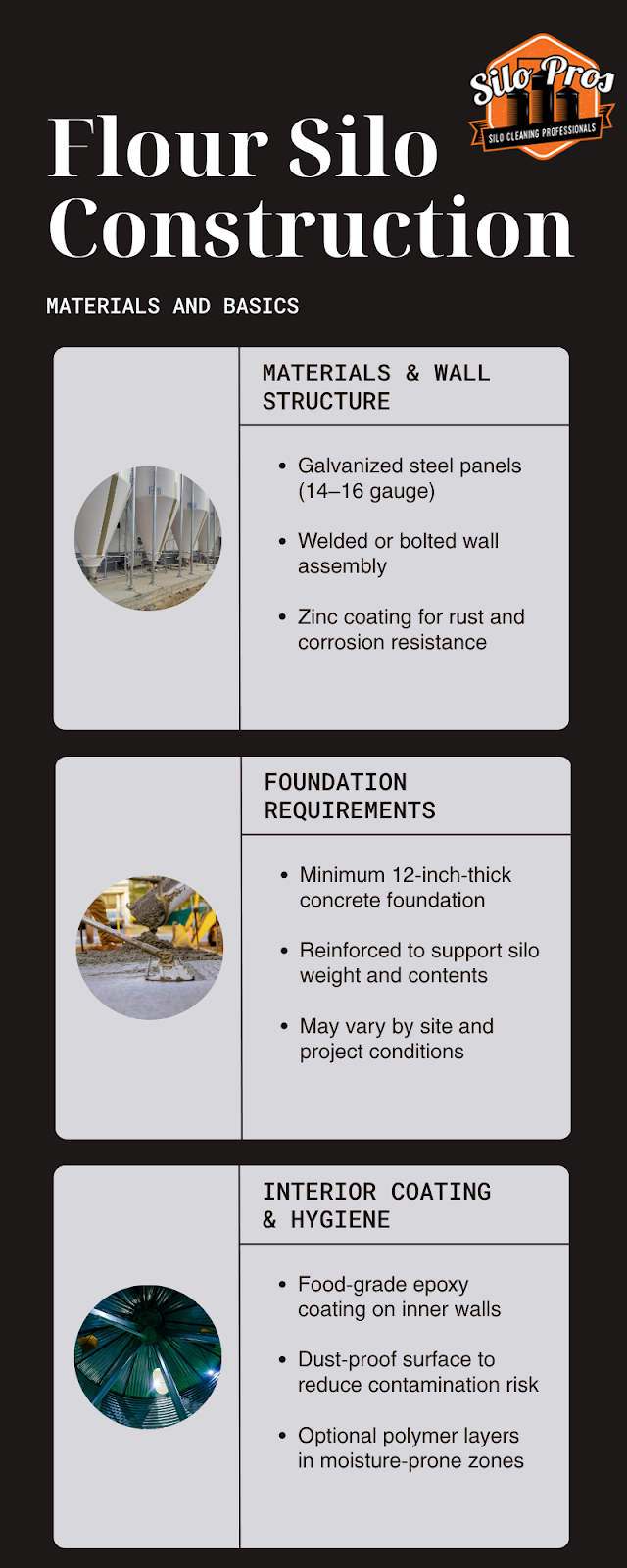 Modern flour silos blend proven engineering with practical design to safely store tons of flour products. The storage system needs to handle both the weight of stored materials and external forces while maintaining hygiene standards for food industry requirements.
Materials and Construction
Steel silos serve as the main industrial facility structure for most flour storage today. The walls use galvanized steel panels, typically 14-16 gauge thickness, welded or bolted together. These panels get an additional zinc coating to fight rust and corrosion. The concrete foundation must also be at least 12 inches thick and reinforced to support the full silo system weight and its contents, but specific needs can very between locations and project requirements.
Inside the flour silo, food-grade epoxy coatings protect the steel and make cleaning easier. These dust-proof surfaces prevent flour particles from sticking and reduce the chance of contamination. Some facilities add extra polymer layers in areas where moisture could be a problem.
Core Components
Bulk flour silo installations require several key mechanical systems to ensure efficient and safe storage of raw materials.
Loading System
- Located at the silo roof
- Uses pneumatic systems or conveyor belts for filling
- Equipped with level measurement sensors to monitor fill levels
Discharge System
- Positioned at the bottom of the silo
- Features gravity-fed chutes with gate valves
- Controls the flour flow rate precisely
- Multiple discharge points for production lines
Ventilation System
- Filter units installed near the top
- Exhaust vents equipped with dust collection systems
- Level switch sensors for moisture detection
- Continuous airflow management to help prevent explosive atmospheres
Size and Layout
Standard flour mill silos range from 12 to 45 feet in diameter and 30 to 120 feet tall. The exact size depends on production process needs and site limits. A basic formula for volume is π × radius² × height, but the typical usable capacity is about 85% of total volume to allow for equipment installation.
Sites need solid ground, good drainage, and room for supply system access. The foundation pad should extend 2 feet past the silo diameter. Space between grain silos must allow for maintenance access and meet safety codes.
Storage Conditions and Monitoring
Proper monitoring of flour silo conditions prevents product loss and maintains quality. Temperature, moisture, and pressure levels need constant watching in storage silos to guarantee the flour is safely stored. If your silos aren’t properly maintained and inspected, it could lead to larger issues which are much more complicated and expensive to resolve.
If your silo is not functioning, contact Silo Pros.
Temperature Management in Flour Silos
Maintaining precise temperature control is crucial for preserving flour quality and preventing spoilage in steel silos. Temperature control starts with keeping the flour at 60-70°F (15-21°C). Most flour silos contain thermocouples placed throughout the silo system which track any temperature changes. When readings go above target levels, automated cooling systems kick in. These include ventilation fans that pull in cooler outside air and push hot air out through exhaust ports.
Moisture Control Systems
Proper moisture management is an essential element that determines the long-term viability of stored flour products. Moisture control makes or breaks flour storage success. Target moisture levels should stay below 14%. Modern silos use level measurement sensors at multiple points to catch trouble spots early. Anti-condensation systems prevent water droplets from forming on silo walls and contaminating the flour.
These include:
- Insulated wall construction
- Air circulation systems
- Dehumidification units
Pressure Monitoring and Safety
A robust pressure monitoring system ensures both product integrity and structural safety in industrial facilities. Pressure monitoring protects both the flour and the silo structure along with the workers who interact with the silo regularly. Pressure relief valves open automatically when internal pressure rises too high during loading or temperature changes. Vacuum breakers prevent silo walls from buckling inward if pressure drops too low during unloading. Emergency level switch sensors trigger alarms if readings move outside safe ranges.
Regular checks of monitoring equipment keep these systems working right. Weekly testing of alarms, monthly calibration of sensors, and yearly inspection of pressure relief valves create a solid safety net. Smart monitoring systems now send real-time alerts to phones when conditions need attention.
Maintenance and Cleaning Procedures
Daily visual inspections form the foundation of solid flour silo maintenance. Walk around your silo system to spot unusual sounds, leaks, or discharge issues. Check that pressure relief valves are working and level measurement readings are normal. A quick look at your equipment ensures smooth material flow.
Weekly Monitoring Tasks
Monitor moisture levels inside the steel silo using hand-held meters. Test all safety devices, including level switches and explosion vents, for explosive atmosphere prevention. Check that pneumatic systems maintain proper pressure. Inspect belts, chains, and other moving parts for proper tension and alignment.
Monthly Upkeep
Remove flour particles buildup from silo walls using rubber mallets – never enter the silo during this process. Lubricate all bearings and chains according to the manufacturer’s specs. Test emergency shutdown systems and update maintenance logs. Schedule professional inspections of ladders and platforms.
Required equipment:
- Air compressor with cleaning attachments
- Industrial vacuum system
- Approved cleaning solutions
- Personal protective gear (respirator, safety harness, goggles)
Before cleaning, lock out all power sources and post “Do Not Operate” signs. Station a safety observer outside. Start cleaning from top to bottom, focusing on corners and discharge points where material builds up. Use dry cleaning methods whenever possible to avoid introducing moisture. Silo cleaning and maintenance should not always be done in house. Many dangers can come with keeping your silos in working order. Hire a professional to ensure the work is done correctly and safely.
Fixing Common Issues
Common challenges in flour mill operations can be effectively managed through targeted solutions and proper maintenance procedures. Here are some common issues and their recommended solutions:
- Blockages near discharge points – Increase air pressure or use mechanical flow aids – never enter silo manually
- Moisture accumulation in silos – Improve ventilation, check/replace seals around openings, install moisture meters
- Equipment wear and tear – Monitor conveyor belts/bearings/discharge equipment, replace worn parts, maintain spare parts inventory
Contact professional silo service teams for issues beyond basic maintenance and cleaning tasks.
Keep Your Flour Silo in Prime Condition
Flour silos are far more than storage tanks—they’re integral to maintaining product quality, food safety, and production efficiency across the milling and baking industries. From construction and airflow design to temperature control and moisture monitoring, each component plays a critical role in protecting your flour and your operations.
When properly managed, a silo system reduces contamination risks, prevents costly downtime, and ensures compliance with stringent food safety standards. But achieving that level of performance takes more than equipment—it requires informed decisions, regular maintenance, and expert support.
If you’re designing a new facility or looking to optimize an existing system, partnering with professionals who specialize in flour silo solutions can save time, reduce risk, and deliver long-term results.
Contact Silo Pros to schedule a site assessment or consultation. Our team will help you implement the right systems, improve safety, and keep your flour flowing smoothly—day in and day out.